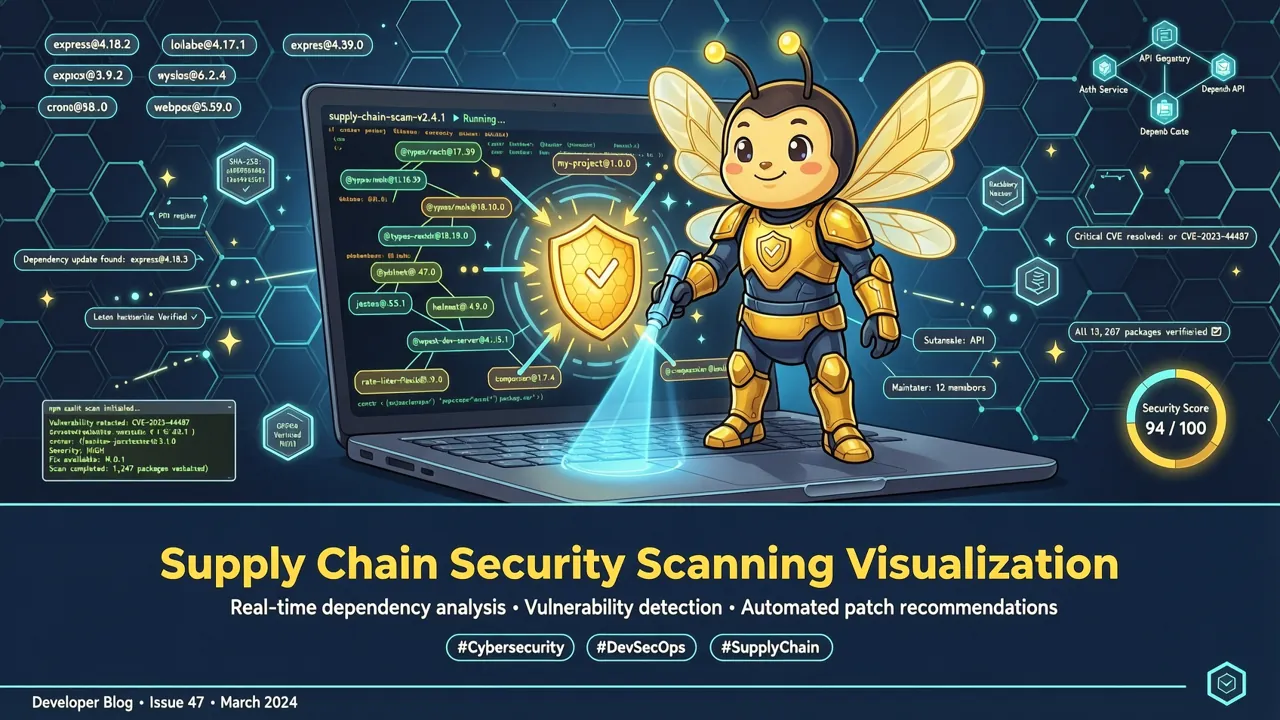
Bumblebee Complete Guide: Perplexity's Open-Source Developer Supply Chain Security Scanner
In a nutshell: Bumblebee is a zero-dependency, read-only supply chain scanner written in Go. In a single run, it scans every potentially exploitable software layer on your machine — from npm packages to MCP servers and browser extensions.
Why Bumblebee Matters So Much in 2026
With AI tools exploding in popularity, developers' local environments have turned into massive, unaudited attack surfaces. We install MCP servers as casually as npm packages. We trust a VS Code extension because it has 10K+ stars. We click links in Discord just to grab a "super handy" CLI tool.
Bumblebee was built exactly to address this blind spot. It's not another SBOM (Software Bill of Materials) generator. Instead, it runs directly on your dev machine and reads the actual, live state of your software.
Core Capabilities: One Scan, Full-Stack Coverage
Bumblebee's core value lies in its breadth and depth:
✅ 1. Multi-Language Package Manager Scanning
- npm:
package.json&node_modules - PyPI:
requirements.txt,pyproject.toml,pip list - Go:
go.mod,go list -m all - RubyGems:
Gemfile.lock - Composer:
composer.lock
✅ 2. MCP (Model Context Protocol) Server Scanning
This is Bumblebee's most forward-looking feature. It checks all MCP servers installed on your local machine and cross-references them against known malicious or suspicious registries.
✅ 3. Editor & Browser Extension Auditing
- VS Code: Scans the
~/.vscode/extensions/directory - Browser Extensions: Reads Chrome/Firefox extension manifests
✅ 4. Zero Dependencies & Read-Only Design
- Written in Go 1.25 with no non-standard library dependencies.
- Performs zero write operations at runtime. Doesn't modify your environment — safe and reliable.
Getting Started: Three Steps to Install and Use
Step 1: Install
You need Go 1.25 or higher installed first.
# Install Bumblebee
go install github.com/perplexityai/bumblebee@latest
Step 2: Run a Scan
# Run a full supply chain scan
bumblebee scan
Step 3: Read the Results
Bumblebee outputs a clear Markdown report listing all identified risks along with specific remediation suggestions.
Bumblebee's Strengths and Limitations
| Dimension | Strengths | Limitations |
|---|---|---|
| Architecture | Pure Go, zero external dependencies, trustworthy | Requires a Go environment — an extra hurdle for pure JS/Python teams |
| Coverage | Covers traditional package managers + the emerging MCP ecosystem | Detection database is still a work in progress, not a final release |
| Security | Strictly read-only, no outbound network calls, CI/CD friendly | Currently at v0.1.1 — not yet at 1.0 stable |
| Ease of Use | Clean CLI, friendly output format | No GUI — requires terminal usage |
Conclusion: A Tool That Must Be Part of Your DevSecOps Pipeline
Bumblebee isn't a "nice-to-have" toy. It's an absolute must-have. For any team embracing the AI toolchain, it provides the first — and most important — line of defense.
If you haven't started scanning your dev environment yet, now is the best time to start.
Take action now: Visit github.com/perplexityai/bumblebee for the source code and latest documentation.
This article was auto-generated by dashen-tech.com's AI writing assistant, based on publicly available information as of July 14, 2026.