How AI Will Make You a Better Writer
What would it be like to read poetry, stories, or novels about the human condition written entirely by computers?
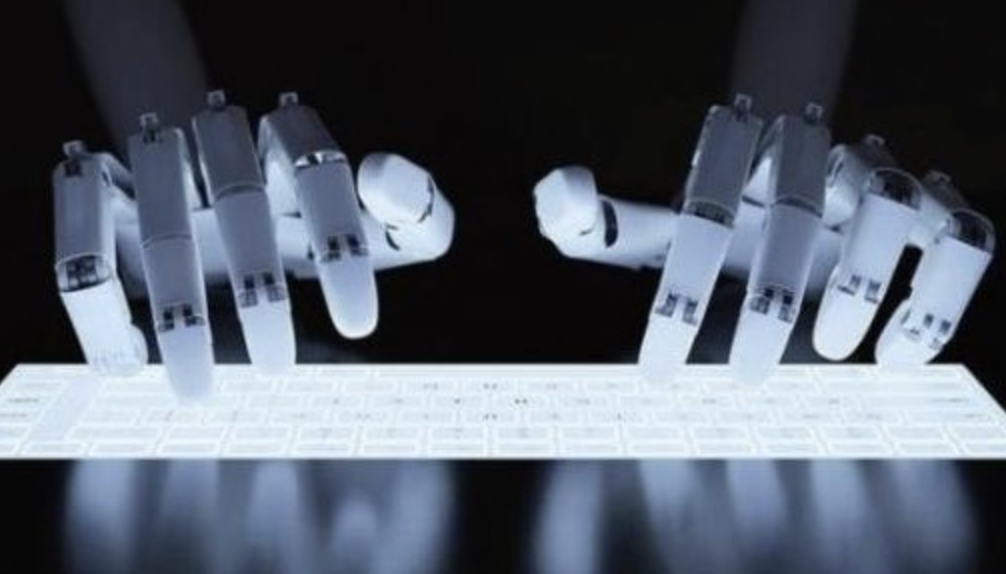 This is not a crazy question.

Legendary writer Roald Dahl already created this nightmarish scenario for authors in his disturbing short story "Someone Like You" (1953). The story tells of a massive machine that could write prize-winning novels based on an author's work in 15 minutes. Yet, until Dahl's death, this machine never appeared. But today it no longer seems like a crazy idea. There have been many recent examples showing the convenience of AI in the writing field.
Chinese science fiction writer Chen Qiufan uses artificial intelligence - in the form of text generators - to create some dialogue for his bestsellers. Although the machine-generated content doesn't introduce new ideas or take Chen's narrative in a new direction, the voice and style behind these words are very similar to the author's voice and style.
Chen says that an AI prototype developed by Innovation Works has written his past works - a reverse catalog consisting of over a million Chinese characters. Although the program had to be adjusted several times to get the best results, Chen says the idea of using AI for writing is very attractive.
"Traditional literature is becoming increasingly boring and irrelevant to our rapidly developing technological lives. We need something fresh to stimulate people's minds and emotions," he said.
Going back to 2016, The Washington Post internally developed the first AI prototype Heliograf to help cover the Rio 2016 Olympics. This robot could generate short reports for readers, letting them report on various competition results, including medal awards.
Next came Quill, "AI technology for automatically reporting relevant information on a large scale," according to the company. Quill can generate relevant, targeted articles with "insightful" narratives through analysis of machine or human-compiled data (spreadsheets and blog posts). According to MIT Technology Review, as early as 2015, Quill was writing over a million words per day.
Close on its heels is Wordsmith by Automated Insights. Along with financial reports, Wordsmith continues to write about college sports and minor league baseball. Wordsmith can interpret raw data - whether sports statistics and scores, or quarterly revenue statistics for a long list of companies in a specific industry - and create jazzy articles in seconds.
And so on... new AI products are constantly hitting the market every day.
That said, the relevant question is, will AI writers reach the level necessary to put human writers out of work?
Not necessarily!
As a writer, you gain your strength by fusing your life experiences, your thoughts and ideas, and your intuitive ability to reason and tell stories with empathy. Although AI and machine learning are developing by leaps and bounds, they still cannot humanize writing.
What AI lacks is storytelling, which is a primal human strength.
Writers of all forms understand that storytelling is important because it helps others remember what we tell them. For relatively simple routine tasks, such as reporting baseball game scores or company profits, AI robots will soon provide what you read. But if you need to inject empathy, humor, and style into a story, humans at least do better for now.
The future will take us to a collaborative writing scenario where AI does the routine work and humans produce the essence. The writing business will become an AI collaboration event where humans can provide creative juice and AI data insights.
Here are some ways AI can help authors create better content.
Eliminate Unnecessary Words
 In workshops and writing guides, the warning "use fewer words" is one of the basic rules.
For users, nothing is more confusing than long, complex sentences containing multiple phrases and clauses. Unnecessary words come in all shapes and sizes and are difficult to categorize. To solve this problem, be stricter with your own writing and consider whether each word is needed.
That said, "bad" first drafts usually go through extensive editing. When you finish editing, you usually ignore the objectivity behind the use of complex adverbs and long sentences.
Let AI do all this heavy lifting for you.
AI applications highlight adverbs, recommend simpler words, and mark passive voice. So when you put your draft into the application, it shortens the editing process by marking problems in the text so you can focus on simplifying those parts.
Therefore, as a writer, you can focus on creativity and leave readability to AI.
Proofreading
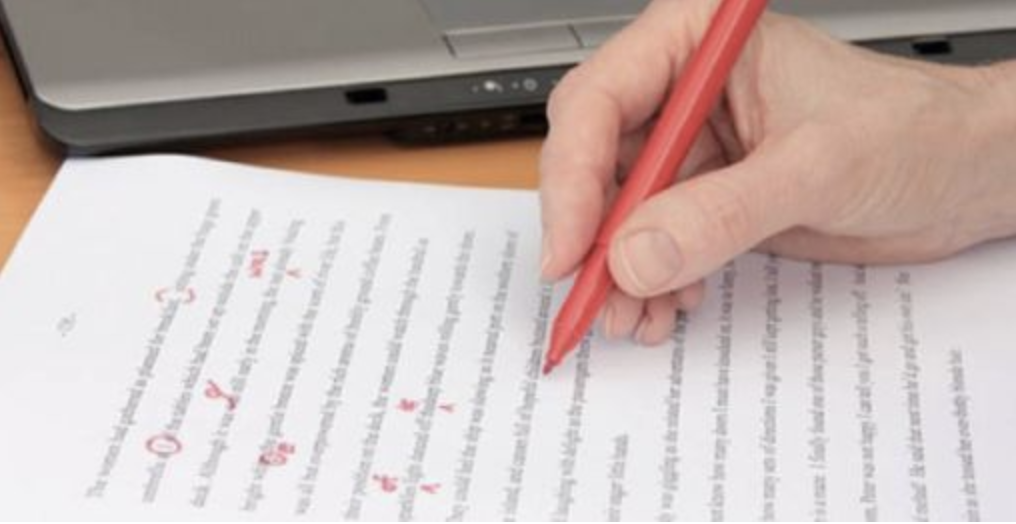 Proofreading is not an additional process to writing, but a necessary one.
It's an essential step that allows you to go back to anything you've written, read every line you've written, and correct the errors you made while writing and fixing them so that your final draft has no typos.
Proofreading is an important element in producing excellent written documents and requires good knowledge and patience to proofread documents effectively. This is also very important when submitting any work.
Today there are many AI-based software that can help writers with proofreading.
The software can detect spelling errors, grammatical errors, and correct them. There are some software that can detect errors synchronously during the writing process. The software understands the nuances of writing and notifies about complex or overused words. There are also software like Grammarly that can remind authors about punctuation, grammar, style, sentence structure, and spelling.
Therefore, we can say that AI eliminates the drudgery in writing, making it a truly enjoyable experience.
Research
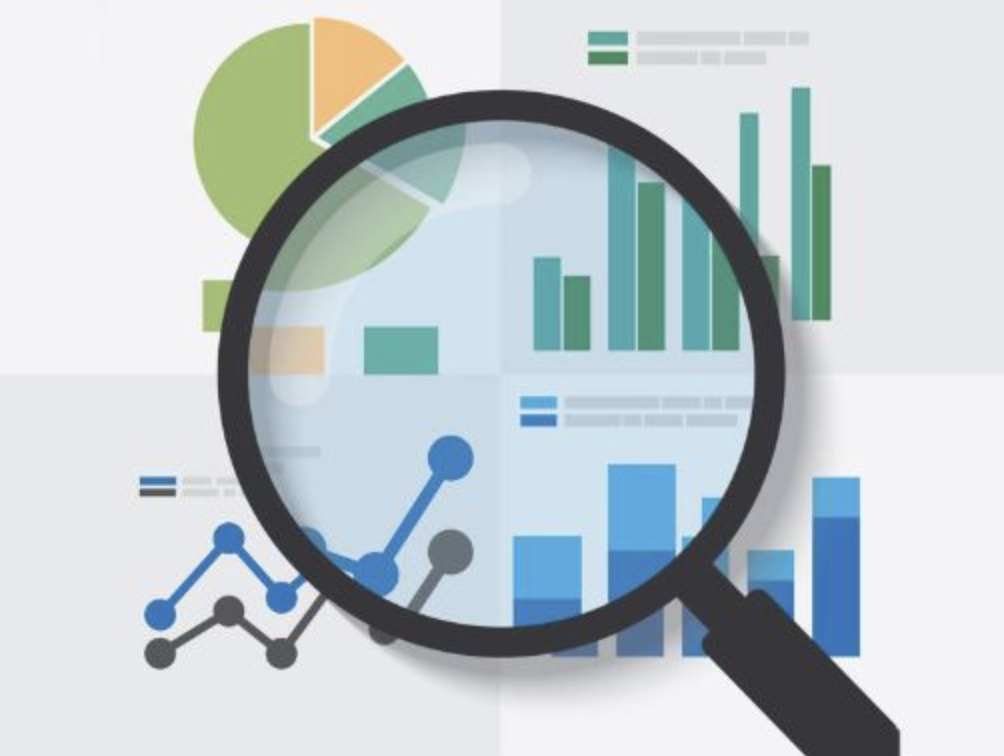 All writers need research. Whether you're writing a memoir based on your own life, a story set in a community you know, a fantasy in a created universe, or a feature article, research can add depth, authenticity, and those details that further depict or characterize.
One thing AI and machine learning can help with is compiling information for authors.
AI helps you delve into millions of words and understand what your readers think, feel, and want through powerful text analysis. By automatically running thousands of written comments through natural language processing and sentiment analysis, you can clearly see trends and understand current emotions in real-time.
AI collects data and helps you actually process it, then make decisions and actions based on facts, not just intuition.
In short, it eliminates the uncertainty that comes with satisfying "fickle" readers and helps you accurately give them what they want to read.
Finally, Help You Improve
 AI and machine learning are great for automating repetitive tasks and non-judgmental decisions.
Recall how Google used machine learning in 2012 to let a supercomputer identify cats in millions of YouTube video thumbnails. The computer's accuracy was 75%. But preschool children can identify cats 100% of the time. On the other hand, supercomputers can solve difficult math problems in seconds, while mathematicians themselves take longer.
If you're making the same type of thing every day, that's not good for you as a writer. Eventually, AI can definitely replace you. Therefore, modern writers need to always be in creative discomfort mode to avoid running out of talent.
Psychologist Vygotsky believed in 1978 that learning is most effective within the "zone of proximal development." I know this sounds like a psychology lecture, so simply put, it's a space slightly beyond the learner's current knowledge base and skill level, but still within reach with some effort.
Simply put, the constructive discomfort we're talking about here is treating discomfort as a means to achieve goals, rewarding yourself for enduring a little discomfort every day.
Write something every day, a little outside your comfort zone, but achievable with some effort. Learn and master new skills and use them in different areas. Improve your writing ability little by little every day.
Remember that AI can only help you with part of the work, but it's not meant to replace creative people.
Your job is to humanize as much as possible, add creativity to your writing, and over-relying on it will make you lose your job.
As psychologist Edward de Bono said.
"Creativity is about breaking long-established patterns in order to look at things with different eyes."