Say Goodbye to Chaos, Embrace Efficiency: Comprehensive Analysis of ERPNext Open-Source ERP Software**
1. Introduction: ERPNext's Past and Present
Are you still troubled by data inconsistencies between multiple systems? Are you still frustrated by the inefficiency of paper-based office work? Or are you deterred by the high costs of traditional ERP software? If your answer is yes, then ERPNext is the solution tailor-made for you.
ERPNext is an open-source Enterprise Resource Planning (ERP) software designed to provide a unified platform for businesses of all sizes to manage all core business processes including accounting, purchasing, sales, human resources, inventory, and project management. Unlike traditional ERP software, ERPNext is 100% open-source, meaning you can use all its features for free without paying expensive licensing fees.
ERPNext is built on the Frappe framework, a full-stack web application framework written in Python and JavaScript. This gives ERPNext high customizability, allowing businesses to adjust software features according to their needs or develop new features. Additionally, ERPNext has an active global user and developer community that provides strong support and continuous feature improvements.
2. Core Features: The Power of ERPNext
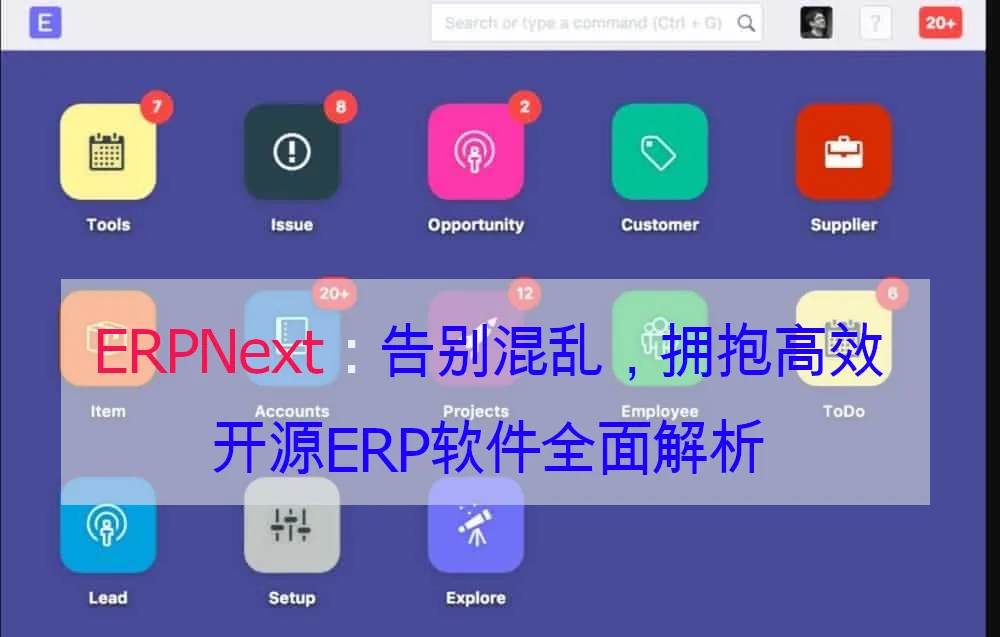
ERPNext covers all aspects of enterprise operations, with main functional modules including:
- Accounting: Manage cash flow, record transactions, generate financial reports, handle taxes.
- Customer Relationship Management (CRM): Manage sales leads, follow up on opportunities, send quotes.
- Selling: Manage sales processes, create sales orders, manage deliveries.
- Buying: Manage suppliers, create purchase orders.
- Stock Management: Manage warehouses, track inventory, manage batches and serial numbers.
- Manufacturing: Simplify production cycles, track material consumption, manage production planning.
- Project Management: Track tasks, manage schedules, monitor project budgets.
- Human Resource Management (HRMS): Manage employee information, process payroll, manage attendance and leave.
- Asset Management: Manage the purchase, maintenance, and depreciation of fixed assets.
- Website: Create and manage company websites, including blogs and web pages.
- Tools: Provide task lists, notes, calendars, dashboards, global search, and other tools.
3. Why Do Small Businesses Need ERP?
In the digital age, small and medium enterprises (SMEs) also face challenges similar to large enterprises, such as resource planning and management. Traditionally, SMEs usually use various tools and platforms to manage different aspects of their business, such as using spreadsheets for accounting and separate software for customer relationship management, which leads to data dispersion and inefficiency.
ERPNext can help SMEs solve these problems with the following advantages:
- Unified Platform: ERPNext centralizes all business data into one system, breaking down information silos.
- Improved Efficiency: Automate business processes to improve work efficiency and reduce human errors.
- Real-time Data: Provide real-time data to help enterprises make timely decisions.
- Customizability: Can be customized according to the specific needs of the enterprise to meet personalized requirements.
- Cost-effectiveness: Open-source and free, reducing software licensing costs, with relatively low implementation and maintenance costs.
- Scalability: As business grows, ERPNext can easily scale to adapt to new needs.
4. ERPNext Usage Tips
- Make Full Use of Global Search (Awesome Search): Use the global search bar to quickly find any function or document.
- Customize Workflows: Create custom workflows according to enterprise needs.
- Utilize Reports and Dashboards: Use detailed reports and dashboards to gain deep insights into business data.
- Explore Community Resources: Actively participate in user forums to get support and suggestions from other users.
- Utilize Frappe Framework's Low-Code/No-Code Features: Create new applications or customize existing features without writing a lot of code.
5. ERPNext Pricing System
ERPNext has multiple deployment methods, including:
- Frappe Cloud: Provides hosting services including unlimited users and product warranty. Small businesses pay $50 per month. Large enterprises have customized solutions and need to contact sales.
- Self-hosting: Deploy ERPNext on your own server, completely free. This method is suitable for companies with technical teams. But you need to bear the costs of servers, security, and backups yourself.
- Success Pack: Provides a simple and cost-effective entry solution.
Note that although the ERPNext software itself is free, if you need professional implementation and consulting services, you may need to hire Frappe's partners.
6. ERPNext vs. Veteran Open-Source ERP Odoo
Compared to other open-source ERP solutions (such as Odoo), ERPNext stands out. Here is a detailed analysis of the key differences:
-
Open-source commitment: ERPNext is 100% open-source with no licensing fees, while Odoo uses an "open core" model where some key modules (such as financial accounting and upgrades) are paid add-ons. This means all ERPNext features are available for free on GitHub.
-
Pricing: ERPNext's pricing structure is simpler, usually $25 to $50 per user per month depending on region, while Odoo's pricing is complex, needing to consider applications, users, regions, and additional success pack fees.
-
Customization: ERPNext allows easy customization using the Frappe framework, users can create applications and modify features with minimal coding through its "DocType" architecture. On the other hand, Odoo usually requires programmers and deployment steps, even for small customizations.
-
Scalability: ERPNext is designed to handle large amounts of data more efficiently than Odoo, with optimized system performance that reduces response times.
-
Local needs: ERPNext includes features tailored for local needs, such as employee loans and expense management, while Odoo users usually rely on community modules to meet these needs.
-
User experience: Compared to Odoo's relatively complex interface, ERPNext provides a cleaner, more modern, and easier-to-navigate user interface.
-
Upgrades: ERPNext provides free upgrades, while Odoo has stopped allowing free upgrades after a certain version.
6. Common Questions
- How to implement ERPNext? It is recommended to seek help from professionals to ensure the system is optimally configured according to business needs. Customized solutions can be obtained through Frappe's partner network.
- Do I need to self-host? It depends on your scale and capabilities. If you're a company, cloud services may be more convenient. Self-hosting requires handling servers, security, and backups yourself.
- Is there a Chinese version? Yes, ERPNext has been translated into over 80 languages, including Chinese.
Summary
ERPNext is a powerful, flexible, and cost-effective open-source ERP software suitable for businesses of all sizes. It can help you break free from data silos, improve work efficiency, and make wiser decisions. If you're looking for a comprehensive ERP system, ERPNext is definitely worth considering.